China Top Hot Rolled Steel Sheet Pile Supplier?

Choosing a China Top Hot Rolled Steel Sheet Pile Supplier requires more than comparing prices. It requires evidence, field experience, and disciplined quality checks. A reliable supplier should explain steel grades, section dimensions, interlock performance, production tolerances, and corrosion protection clearly. These details matter beside a river, where muddy ground and changing water levels can expose weak decisions.

Professor Michael Tomlinson, a widely cited authority on pile design, observed, “Pile design is not an exact science.” This practical warning remains valuable today. Soil investigation, driving equipment, installation records, and site conditions can change the final result. Experienced suppliers understand this uncertainty. They do not promise that one section fits every project. Instead, they review drawings, load requirements, groundwater conditions, and construction access before recommending a Hot Rolled Steel Sheet Pile solution.

Look closely at the factory evidence. Mill certificates should match the delivered bundles. Ultrasonic testing, dimensional inspections, and traceable heat numbers can improve confidence. Photographs of straight interlocks and clean edges are useful, but independent inspection is stronger. Delivery also needs attention. Bent piles, mixed lengths, or unclear labeling can delay installation and increase handling costs.

No supplier is perfect. That deserves honest consideration. Even a capable manufacturer may communicate poorly during urgent orders. A careful buyer should verify production capacity, export experience, packaging methods, and after-sales support. The best partner is not simply the cheapest factory. It is the supplier that documents its claims, admits limitations, and helps engineers make safer decisions under real site pressure.
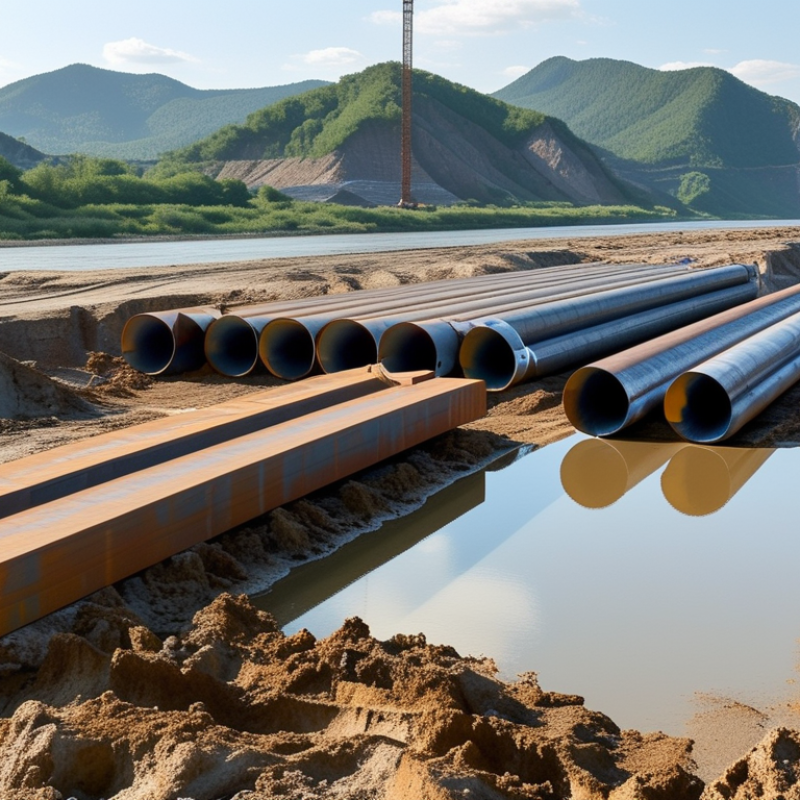
China Top Hot Rolled Steel Sheet Pile Supplier?

What Is a Hot Rolled Steel Sheet Pile?

China Top Hot Rolled Steel Sheet Pile Supplier?

What Is a Hot Rolled Steel Sheet Pile?

A hot rolled steel sheet pile is a deep foundation element formed from heated steel. Rolling shapes the plate into U, Z, or straight-web sections. Each pile has connected edges called interlocks. These edges join adjacent piles into a continuous wall.

Unlike cold-formed products, hot rolling creates thicker corners and stronger interlock areas. This helps piles resist bending, soil pressure, and water movement. EN 10248-1 specifies requirements for hot rolled sheet piles, including dimensions, tolerances, and steel quality. The World Steel Association reported China produced about 1,019 million tonnes of crude steel in 2023. Large output does not automatically mean consistent pile quality. That point deserves attention.

In practical work, engineers check section modulus, yield strength, coating condition, and interlock fit. A test wall should close smoothly without forced alignment. Small edge distortion can create leakage paths. Mill certificates should show chemical composition, tensile results, and heat numbers. Buyers also need clear inspection records.

Tips: Confirm the required section modulus before comparing prices. Request dimensional inspection data and interlock samples. Check whether the stated standard matches the project design. A lower unit price may hide higher driving resistance. Field conditions can defeat a perfect spreadsheet.

China Top Hot Rolled Steel Sheet Pile Supplier? What Is a Hot Rolled Steel Sheet Pile?

Hot rolled steel sheet piles are interlocking steel sections driven into the ground to form retaining walls, cofferdams, quay walls, flood barriers, and other earth-retaining structures. Their strength and durability depend heavily on the steel grade and section design.

The chart compares the specified minimum yield strength of common hot rolled sheet pile steel grades under EN 10248-1. A higher yield strength indicates greater resistance to permanent deformation, but the final sheet pile selection must also consider section modulus, wall height, soil pressure, corrosion allowance, and installation conditions.

Data basis: EN 10248-1 steel grades for hot rolled sheet piles. Yield strength values are minimum specified values in MPa.

Why Choose a Chinese Hot Rolled Steel Sheet Pile Supplier?

China Top Hot Rolled Steel Sheet Pile Supplier?

Why Choose a Chinese Hot Rolled Steel Sheet Pile Supplier?

Chinese suppliers offer broad production capacity for ports, retaining walls, bridges, and temporary excavation works. Many manufacturers produce common U-shaped and Z-shaped profiles in several steel grades. This range helps engineers match section modulus, length, and driving conditions more accurately. Prices can also remain competitive because steelmaking, rolling, cutting, and export services often operate within one supply network. That can reduce handling time. It can also simplify communication.

Reliable procurement depends on more than a low quotation. Ask for heat numbers, mill test certificates, dimensional reports, and loading photographs. Confirm steel grade, pile length, tolerance, interlock performance, and surface condition before production. Third-party inspection may add cost, but it can expose problems early. Standards such as EN 10248 or ASTM requirements should be written clearly in the contract. Verifiable documents matter.

Not every supplier performs equally. Some quotes look attractive. Hidden limits may appear later. Translation errors, uneven coating, or delayed vessel schedules can affect a project. A capable supplier should answer technical questions directly and provide realistic lead times. Sample checks and factory audits improve confidence. Still, buyers should review every claim independently. That extra step is sometimes inconvenient, but it protects the structure and the budget.

How to Evaluate Supplier Quality and Production Capability

China Top Hot Rolled Steel Sheet Pile Supplier?

Evaluating a hot rolled steel sheet pile supplier requires more than comparing prices. Begin with production records, not polished brochures. Ask for mill certificates showing chemical composition, yield strength, tensile strength, and impact performance. Check whether each certificate matches the actual heat number. Traceability matters on a crowded construction site.

Inspect the production capability in practical detail. A reliable supplier should explain furnace capacity, rolling mill size, roll design, straightening equipment, and dimensional controls. Ask how often flange width, web thickness, length, and straightness are measured. Request recent inspection reports and sample pieces from regular production. Look beyond the brochure. Ask for evidence.

Quality systems also deserve direct verification. Review calibration records for gauges and testing machines. Confirm whether inspectors understand welding risks, interlock accuracy, and surface defects. An independent laboratory can verify selected samples before shipment. This adds cost, but it may expose problems early. A perfect sample proves little if batch control is weak. Some suppliers provide complete documents yet resist a factory audit. That hesitation should be recorded, not ignored. I would also compare promised output with actual delivery history, because an impressive rolling line cannot compensate for poor scheduling or inconsistent maintenance. Ask difficult questions. Then check the answers against physical evidence.

China Top Hot Rolled Steel Sheet Pile Supplier? - How to Evaluate Supplier Quality and Production Capability

No. Evaluation Dimension What to Check Objective Requirement or Benchmark Recommended Evidence Suggested Weight
1 Applicable Product Standard Confirm that the sheet pile is manufactured to the standard specified in the purchase contract. Common standards include EN 10248-1 and EN 10248-2 for hot-rolled sheet piles, ASTM A572/A572M for applicable structural steel grades, or JIS A 5528 where specified. Standard designation on the quotation, drawings, inspection plan, and certificate. 10%
2 Chemical Composition Check carbon, manganese, silicon, phosphorus, sulfur, and other elements required by the selected grade. Every heat must comply with the chemical limits of the ordered grade; limits vary by standard, grade, and product thickness. Heat analysis and product analysis shown on a traceable material test certificate. 8%
3 Mechanical Properties Review yield strength, tensile strength, elongation, and impact requirements when applicable. Test results must meet the ordered grade and thickness range; no generic strength value should replace the applicable standard requirement. Certified tensile-test results, impact-test results where specified, and laboratory identification. 12%
4 Dimensional Accuracy Verify width, thickness, length, straightness, profile geometry, and interlock dimensions. Dimensions and tolerances must comply with the specified product standard, approved drawings, and purchase order. Calibration records, inspection reports, dimensional sampling plan, and measured inspection data. 10%
5 Interlock Performance Assess interlock fit, continuity, damage rate, and resistance to separation during handling and installation. Interlocks should be continuous and free from defects that prevent proper threading; acceptance criteria should be defined before production. Profile drawings, sample assembly records, visual inspection reports, and approved repair procedures. 12%
6 Surface and Internal Quality Inspect laminations, cracks, seams, rust scale, dents, edge damage, and unacceptable surface discontinuities. No defects that reduce structural performance, effective thickness, interlock function, or compliance with the agreed acceptance criteria. Visual inspection records, non-destructive testing procedure where specified, and nonconformance reports. 10%
7 Traceability System Confirm that each bundle or pile can be linked to its heat number, production record, inspection result, and shipment documents. Traceability should remain legible and intact from raw material receipt through delivery. Heat marks, bundle lists, production logs, mill certificates, and packing photographs. 8%
8 Production Equipment Evaluate reheating, rolling, sizing, cutting, straightening, inspection, and material-handling equipment. Equipment must be suitable for the ordered profile, section modulus, length, grade, and production volume. Factory audit, equipment list, maintenance records, process flow chart, and recent production samples. 8%
9 Production Capacity Compare available rolling capacity with the required tonnage, profile mix, delivery schedule, and peak-season workload. Capacity should be demonstrated with planned production slots and confirmed raw-material availability, not only a stated annual figure. Capacity statement, rolling schedule, order backlog, raw-material plan, and production lead-time record. 8%
10 Quality Management Review inspection responsibilities, calibration control, corrective action, document control, and internal audits. A certified quality-management system such as ISO 9001 is useful, but product compliance must still be verified independently. Valid certificate, quality manual, inspection and test plan, calibration certificates, and corrective-action records. 7%
11 Independent Inspection Define whether inspection is performed by the buyer, an independent inspection body, or both. For high-value or critical projects, use a pre-shipment inspection covering documents, dimensions, surface condition, marking, and quantity. Approved inspection and test plan, signed release note, inspection photographs, and final inspection report. 3%
12 Documentation and Certification Check the completeness and consistency of certificates, packing lists, commercial documents, and shipping records. Material certificates should match the ordered grade, heat number, dimensions, quantity, and applicable delivery standard; EN 10204 Type 3.1 may be specified when required. Preliminary certificate for review, final certificate, packing list, certificate of origin where required, and bill of lading. 2%
13 Packaging and Logistics Assess bundle stability, lifting points, corrosion protection, marking, loading method, and transport suitability. Packaging must protect the piles from avoidable handling damage and allow safe identification, lifting, counting, and unloading. Packing specification, loading plan, cargo photographs, bundle dimensions, and weight records. 5%
Total Suggested Evaluation Weight 100%

Note: The standards and verification items above should be matched to the project specification, applicable jurisdiction, ordered steel grade, pile profile, and contract requirements. Suggested weights are procurement evaluation benchmarks, not universal certification criteria.

Which Standards and Specifications Should Buyers Check?

When choosing a China-based hot rolled steel sheet pile supplier, buyers should verify the applicable standard before comparing prices. ASTM A328 covers steel sheet piling requirements in many projects. EN 10248-1 addresses technical delivery conditions, while EN 10248-2 specifies dimensions and tolerances. JIS A 5528 is also common in Asian infrastructure work. The project specification must decide which system applies.

Check the steel grade, yield strength, tensile strength, and chemical composition. These values affect driving performance and structural capacity. Confirm section width, height, thickness, length, and theoretical weight. Small dimensional differences can change the calculated section modulus. Interlock shape matters too. It should fit securely without excessive distortion. Ask for mill test certificates, heat numbers, and independent inspection records. Traceability is not paperwork decoration.

I have seen buyers check only the nominal thickness. That is risky. Actual thickness, straightness, and interlock clearance may influence installation costs. Review impact test requirements when low temperatures or dynamic loads are expected. Check surface condition and corrosion allowance as well. Coatings need separate specifications, including preparation and dry film thickness. A supplier may quote a compliant grade, yet miss the required tolerance class. Clarify this in writing. Some projects also require welding procedures and non-destructive testing, although these details are easy to overlook.

How to Select the Right Supplier for Your Project

China Top Hot Rolled Steel Sheet Pile Supplier?

Choosing the right supplier starts with your project conditions, not online rankings. Define the required section, steel grade, length, corrosion environment, and installation method. A supplier should provide mill certificates, dimensional reports, and traceable heat numbers for every batch. Ask for samples or production records before placing a large order. Small details matter.

Check whether the factory controls rolling, cutting, coating, packing, and quality inspection. Confirm its monthly capacity against your delivery schedule. Request third-party inspection before shipment, especially when piles will support permanent structures. Technical staff should explain section modulus, interlock performance, tolerances, and applicable standards clearly. If answers remain vague, pause the purchase.

Delivery planning also deserves careful attention. Confirm bundle weights, lifting points, port arrangements, export documents, and protection against seawater exposure. Compare complete costs, not only the quoted steel price. A low offer may hide inspection fees, weak packaging, or replacement delays. I have seen procurement teams trust attractive spreadsheets too quickly. That approach needs more skepticism. Independent engineers should review the supplier’s documents when structural risk is significant. Clear communication helps, but written evidence is more reliable.

This website uses cookies to ensure you get the best experience. By continuing to browse on this website, you accept the use of cookies for the above purposes.